UX/UI Design — Academic Project

Colaborapp
Madrid

A gamified civic app turning neighbourhood recycling into a city-wide competition — connecting residents through shared environmental impact, real rewards, and district pride.

UX Research Gamification Mobile UX Figma Sustainability Behaviour Design
12 wk Duration
Academic Project Team
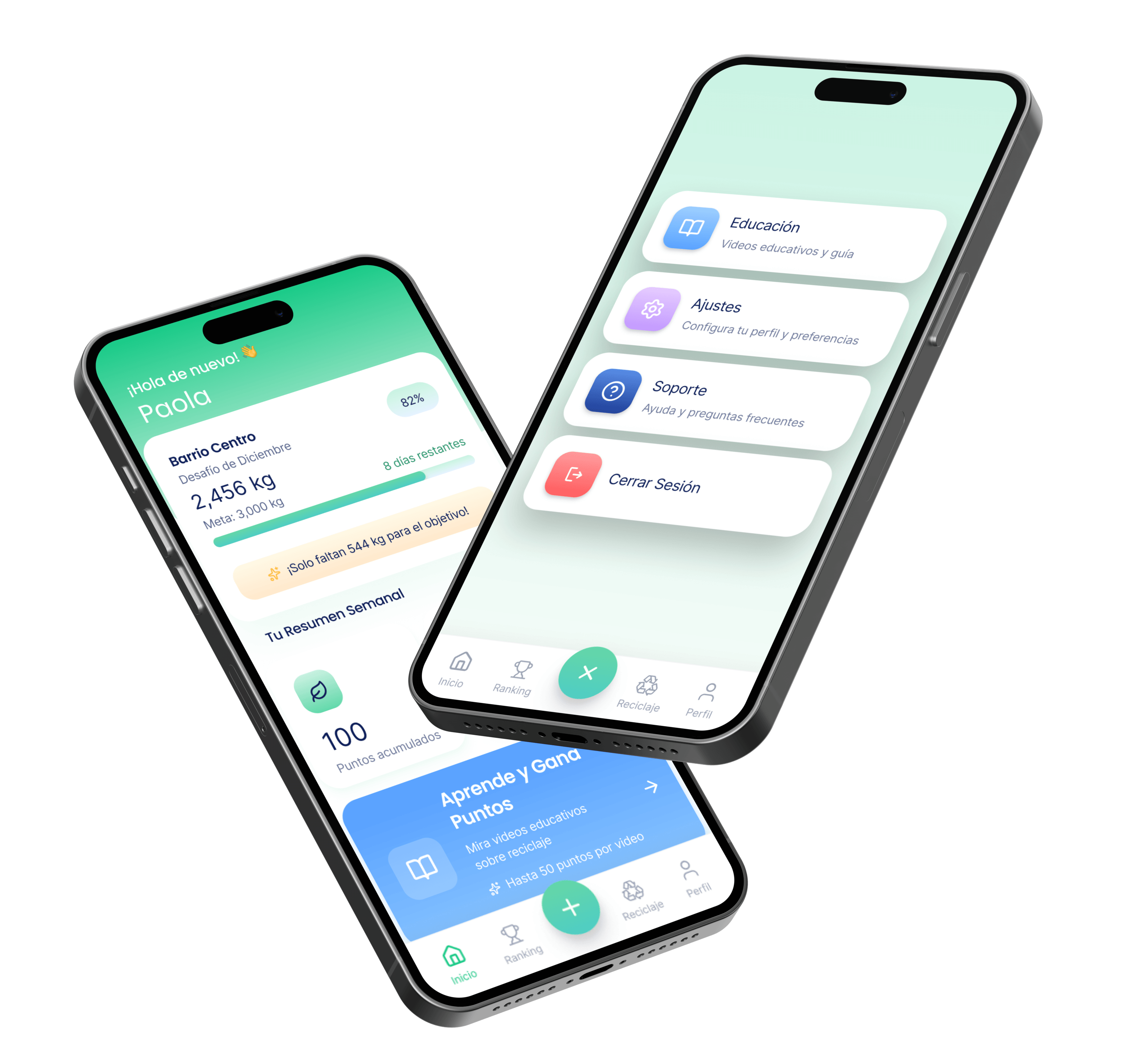
ColaborApp Madrid — app overview
01 — Overview

The Challenge

Madrid generates over 1.7 million tonnes of municipal waste annually, yet recycling rates remain well below EU targets. Traditional awareness campaigns had proven insufficient — residents lacked real-time feedback, social accountability, and tangible incentive to change daily habits.

"¡Transformemos juntos la ciudad!"
Colaborapp Madrid — tagline

The Solution

Colaborapp Madrid makes recycling feel competitive, social, and rewarding. Citizens track their barrio's collective performance on a live leaderboard, earn points for verified recycling actions, and redeem them for real benefits — museum entry, transit discounts, local business vouchers.

Grounded in BJ Fogg's Behaviour Model — aligning Motivation, Ability, and Triggers — and Maslow's hierarchy, meeting belonging and esteem needs through community-driven loops.

02 — Research
Mixed Methods UX Research

Understanding recycling behaviour in Madrid

The research phase combined desk research, a citizen questionnaire, and four structured analytical frameworks to transform raw behavioural data into actionable design insights.

1.2M t tonnes of waste Madrid generates annually — 370 kg per inhabitant
51.4% of waste correctly separated in 2024 — up from just 20.6% in 2018
81% of waste in "resto" containers is incorrectly classified by citizens
48.5% of survey respondents said reward points would most increase their recycling motivation
Method 01

Estado del Arte

Desk research mapped Madrid's recycling infrastructure, municipal campaigns (Haz tu magia, Con erre de, Acierta con la orgánica), and the Estrategia 2030 framework. District-level data revealed a stark gap: Moratalaz leads at 20% separation, while Centro trails at 14%.

Method 02

Citizen Questionnaire

33 responses collected across Madrid, split into two blocks: recycling awareness and civic participation. Key finding: citizens show high environmental awareness but face logistical barriers, unclear classification rules, and a lack of intuitive digital channels that convert intention into consistent action.

Method 03

Behavioural Frameworks

Applied Fogg's Behaviour Model — Motivation, Ability, Trigger — alongside the Arnstein Participation Ladder to identify that recycling fails not from lack of awareness, but from the absence of a visible, participatory system that closes the feedback loop between individual action and collective result.

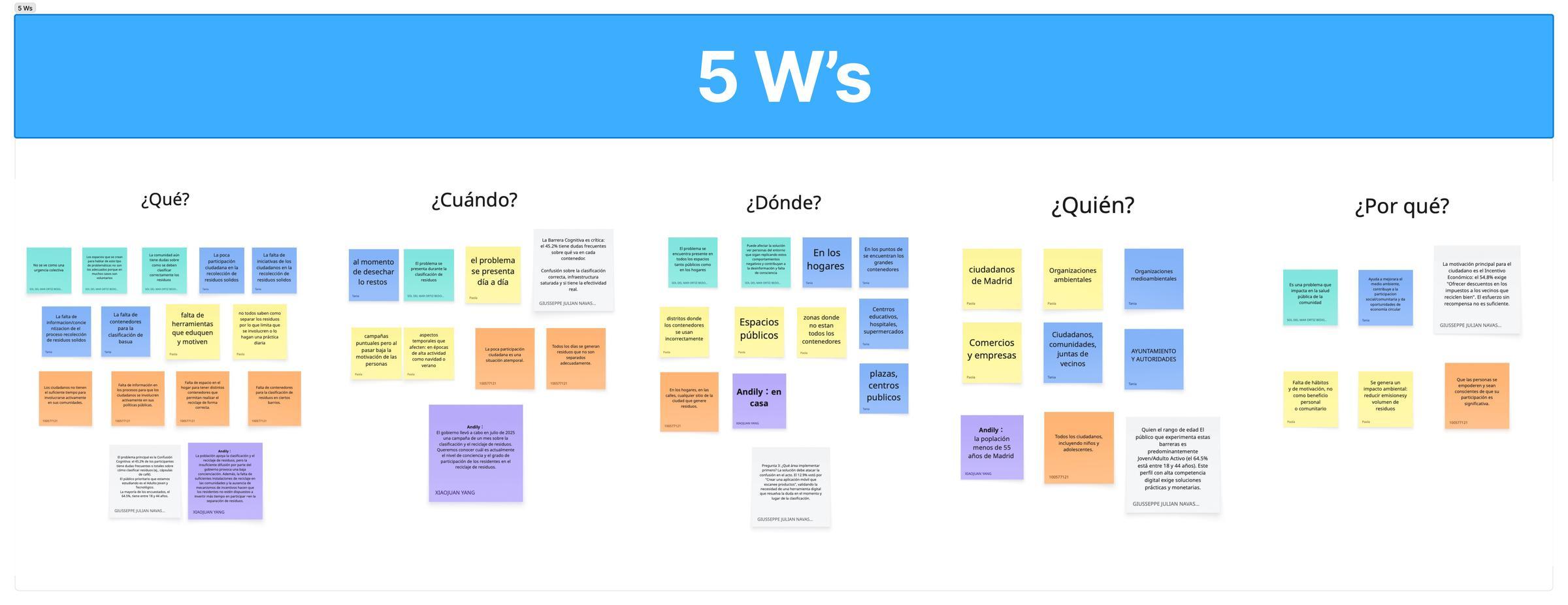
5W's problem analysis board

5W's Problem Analysis

What

Misinformation on how to separate waste, lack of tools, low awareness, practical difficulties and no sustainable habit formation.

When

Daily — especially at the moment of discarding waste or when no adequate containers are nearby.

Where

Primarily in homes, public spaces, streets, plazas, and areas with insufficient or poorly signposted containers.

Who

Citizens, authorities, businesses, community organisations and environmental groups — the whole urban ecosystem.

Why

Root cause: a deficit of environmental culture. Citizens lack information, tools and motivation to separate correctly — not willingness.

AEIOU Framework

A

Activities

Recycling intention is high but the action is intermittent — it fails not from bad will, but from the absence of simple, instant guidance at the point of decision.

E

Environments

Physical context is not a universal facilitator — containers are perceived as insufficient, poorly placed or unsignposted in certain districts.

I

Interactions

Citizens want recognition and tangible benefits. The absence of a feedback channel makes recycling feel like a solitary, valueless action.

O

Objects

Existing digital objects (Decide Madrid, websites, signage) don't resolve incorrect classification at the moment of decision. A unified object is needed.

U

Users

Motivated but underserved. They lack extrinsic motivation (rewards, recognition) and an easy-to-use tool. Intention exists; the bridge to action does not.

"In Madrid there is citizen willingness to recycle, but current channels are not intuitive or motivating enough to foster civic participation. Recycling is still perceived as an individual action, not a collective one — and that limits participation."
Problem Definition — Colaborapp Research, 2025
03 — Process
Design Process

From research to validated concept

A structured ideation sprint combining creative and analytical methods — from open brainstorming through structured decision frameworks — to arrive at the strongest, most viable idea before a single wireframe was drawn.

01

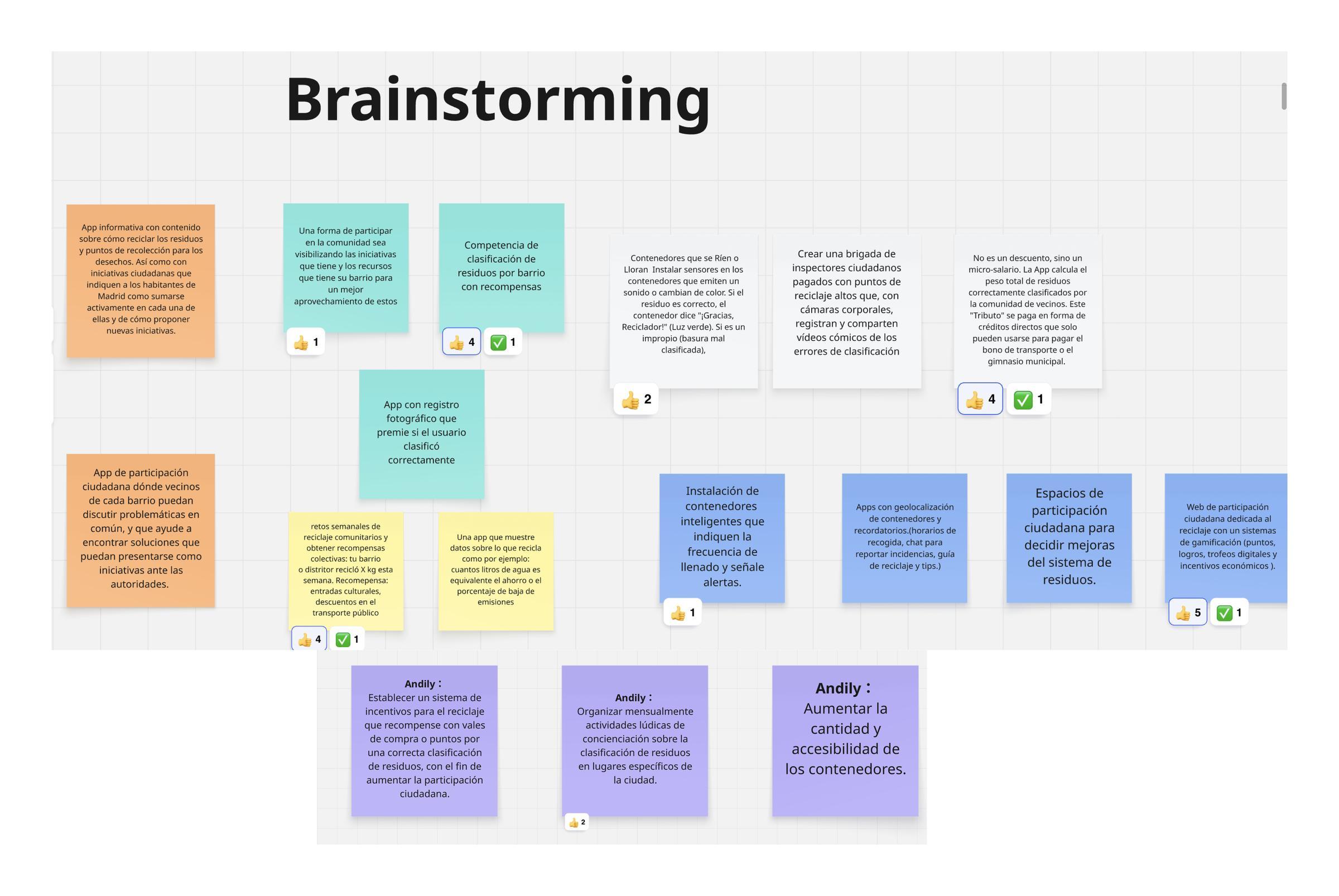
Brainstorming

The team generated ideas freely with no restrictions, exploring every possible direction — from physical infrastructure solutions to digital platforms, social incentives, and educational campaigns. Volume over evaluation at this stage.

02

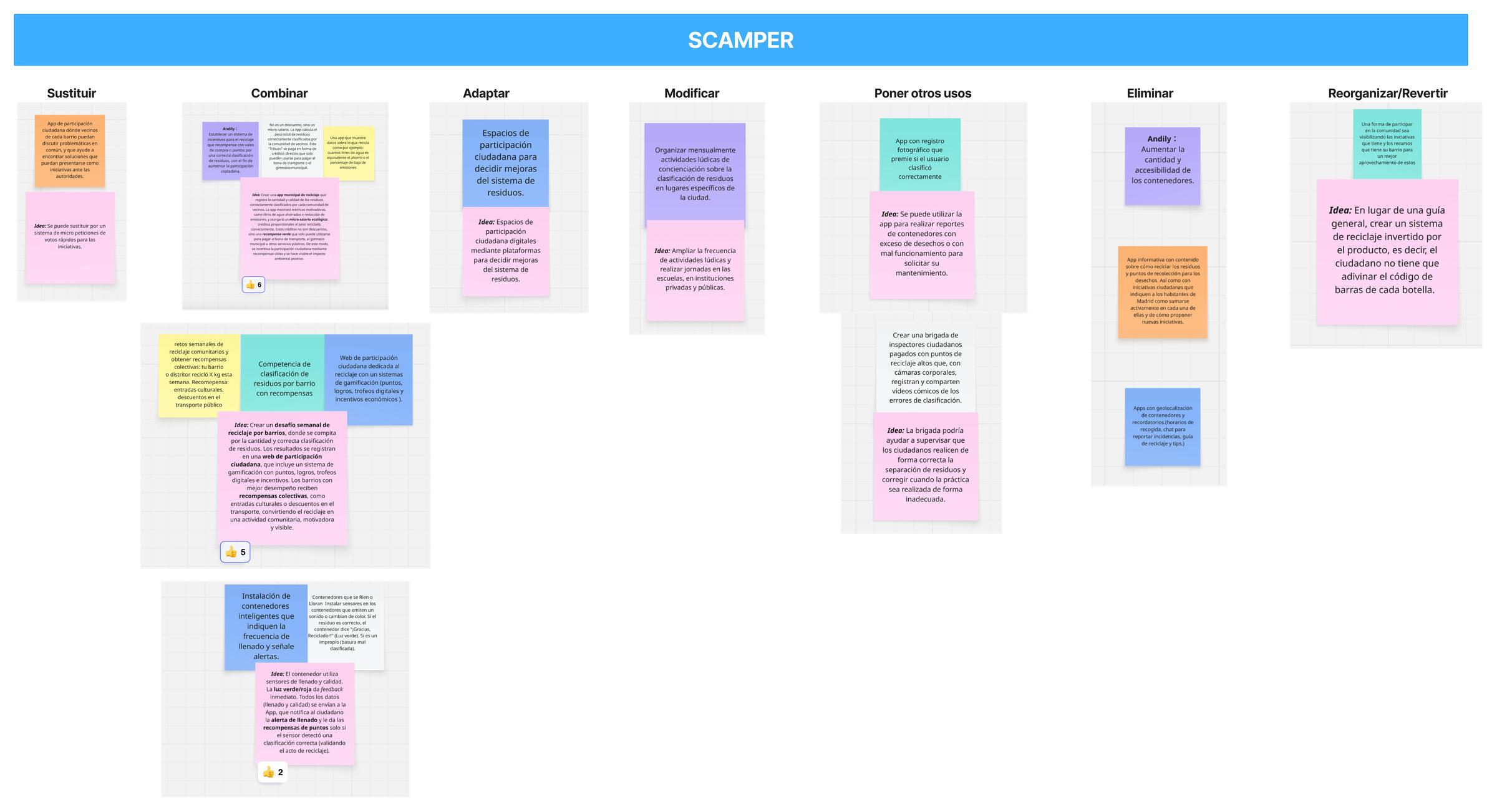
Voting & SCAMPER

Each idea was dot-voted. The top candidates were fed through the SCAMPER technique — Substitute, Combine, Adapt, Modify, Put to other uses, Eliminate, Reverse — to extract the best elements from each and build stronger hybrid concepts.

03

Three finalist ideas

From the SCAMPER pass, three distinct concepts emerged: (1) a gamified district-challenge app, (2) a smart physical infrastructure network, and (3) a public-facing civic education campaign platform.

04

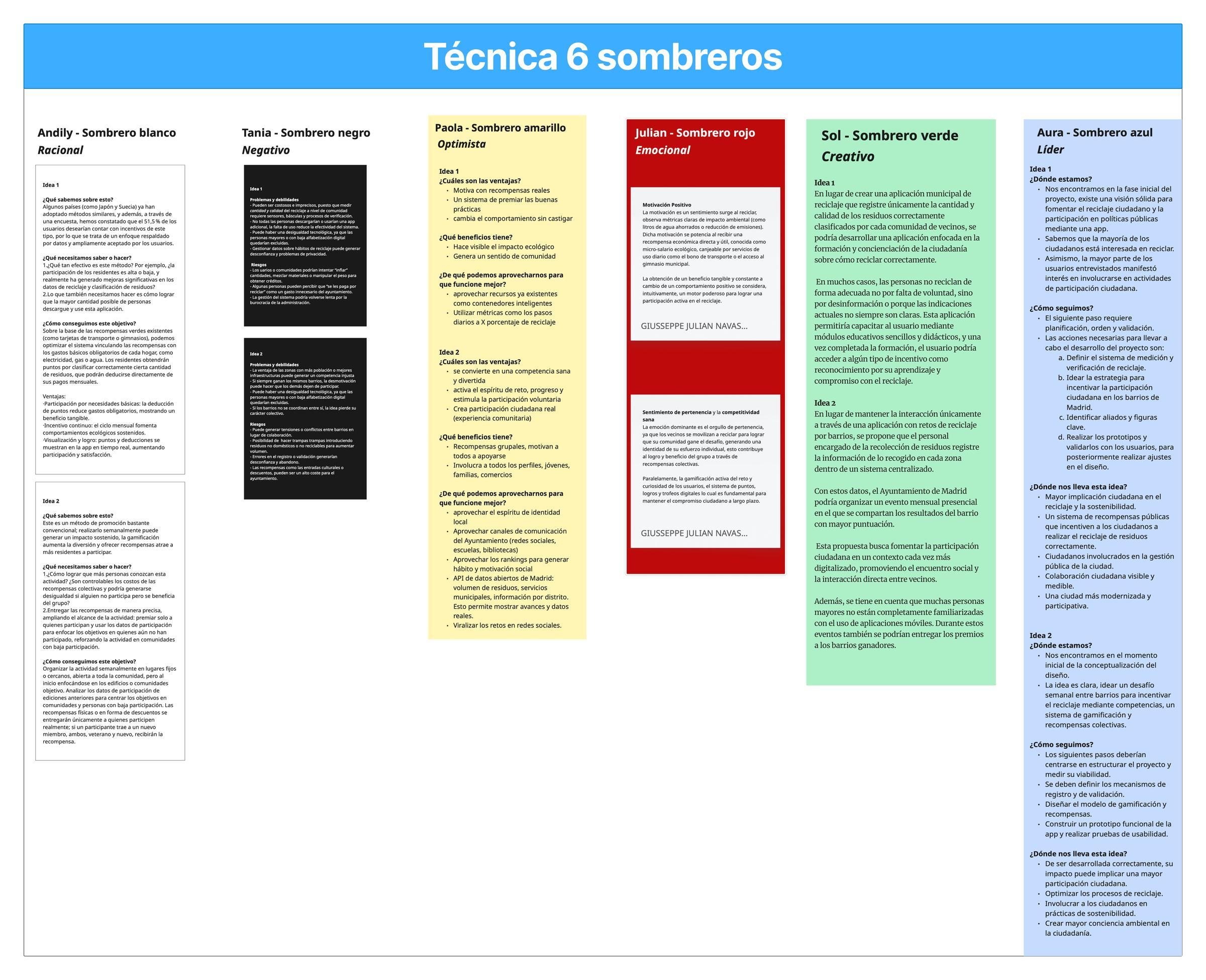
Six Thinking Hats

De Bono's Six Hats method gave the team a structured way to evaluate all three finalist ideas without ego or advocacy bias. Each hat forced a different perspective: facts, emotion, risk, optimism, creativity, and process — ensuring no dimension was overlooked before committing to a direction.

05

SWOT / DAFO Analysis

The gamified district-challenge app outperformed the infrastructure-heavy concept on every strategic axis: no physical investment required, scalable via institutional alliances, and uniquely positioned to convert individual action into visible collective impact.

06

Winning concept

Monthly recycling challenge by districts — citizens accumulate points for verified recycling actions, competing as a neighbourhood. Top districts win collective rewards: cultural tickets, transport discounts, and public recognition — making sustainability tangible, social, and desirable.

Brainstorming session board
SCAMPER methodology board
Six Thinking Hats evaluation matrix
07

User persona & empathy map

Maritza Ramírez — 28, digital-native, Madrid resident. Motivated but underserved: she wants to recycle correctly but finds the system confusing and individualised. Her empathy map revealed four core emotional states: confusion, demotivation, distrust of results, and a deep need to feel part of something larger than herself.

08

Wireframes → high-fidelity in Figma

Core flows designed: Onboarding → Scan & Log → District Leaderboard → Rewards → Learn. Component library built first — typography, colour tokens, and data card patterns established before screens were drawn. Each component validated against the 7 Attributes framework (Useful 5/5, Localizable 4/5, Desirable 4/5).

09

Usability testing & SUS evaluation

12 participants (6M/6F across 3 age groups). SUS score: 70/100 — above the 68-point industry benchmark. 90% task success rate across 5 core scenarios. Primary friction point identified: district selection during onboarding, resolved in the final iteration.

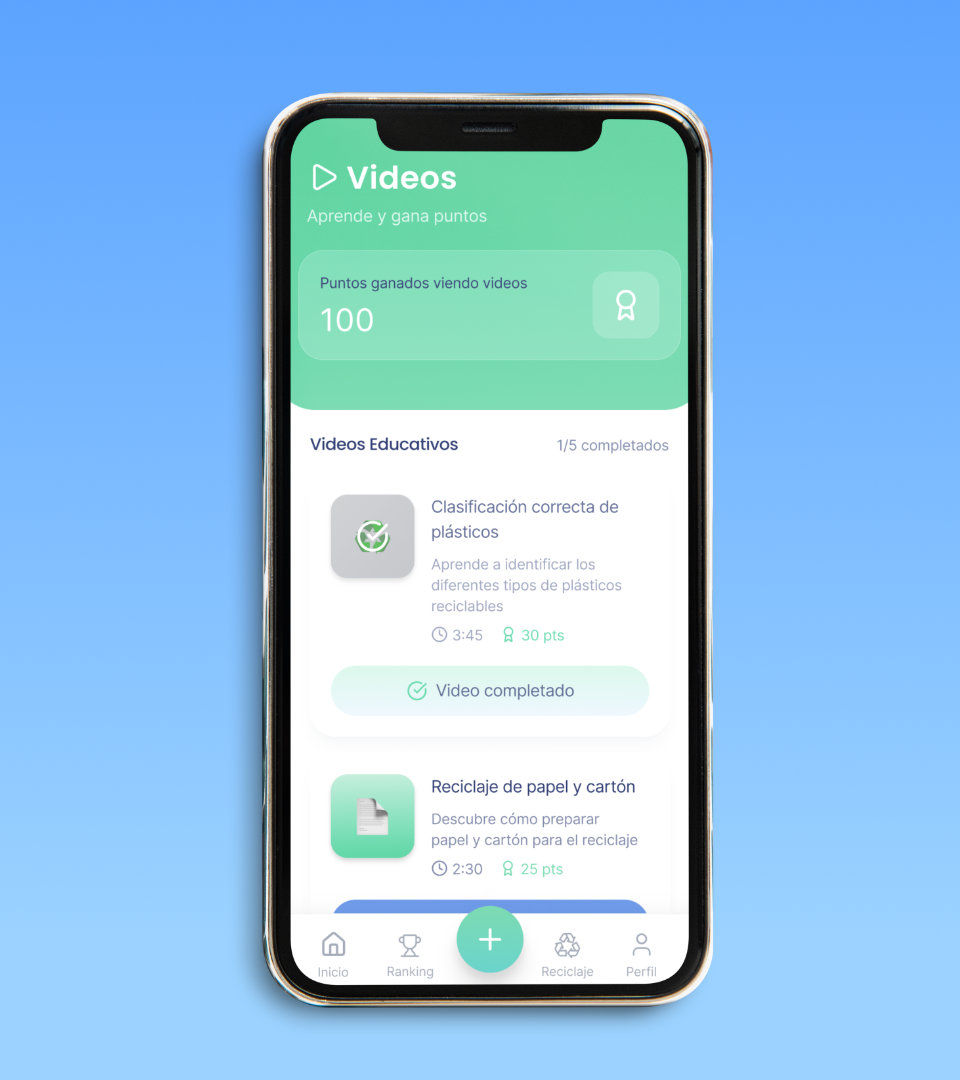
Colaborapp — videos screen
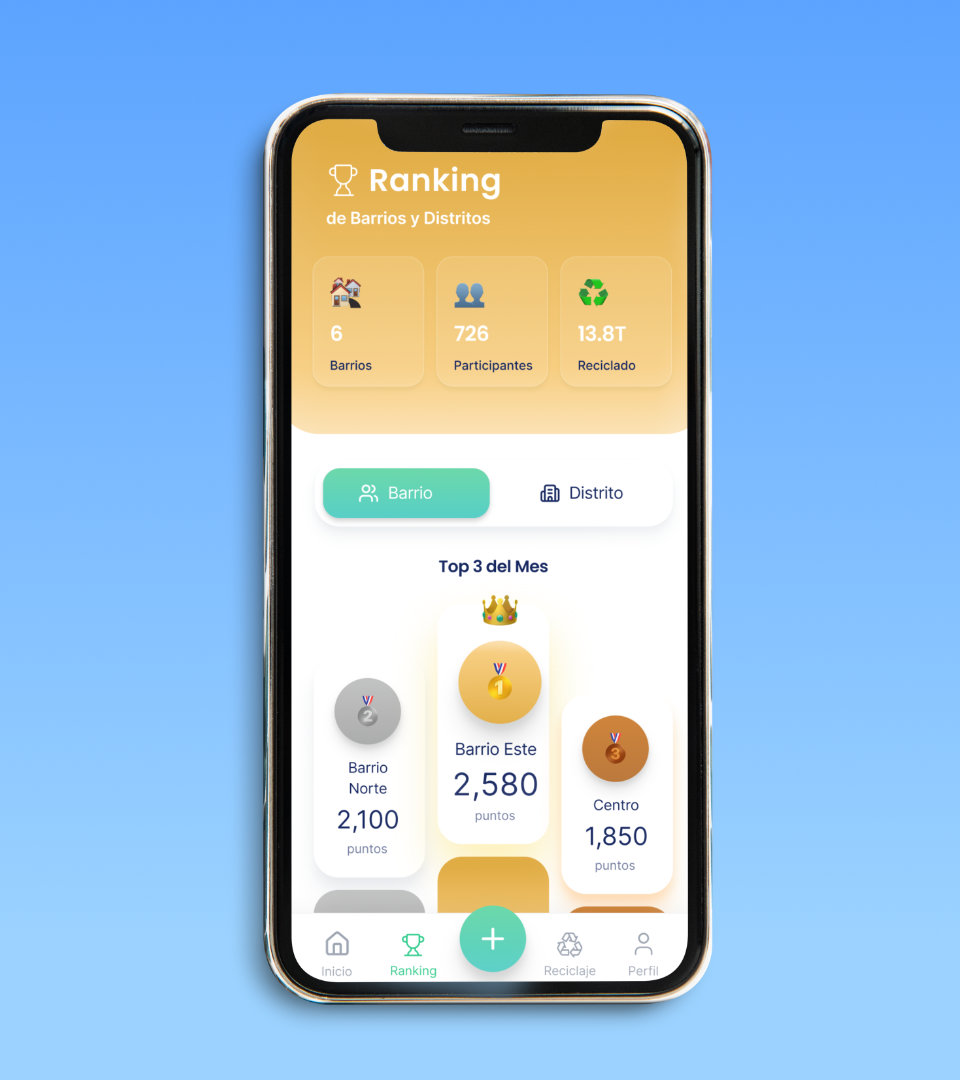
Colaborapp — ranking screen
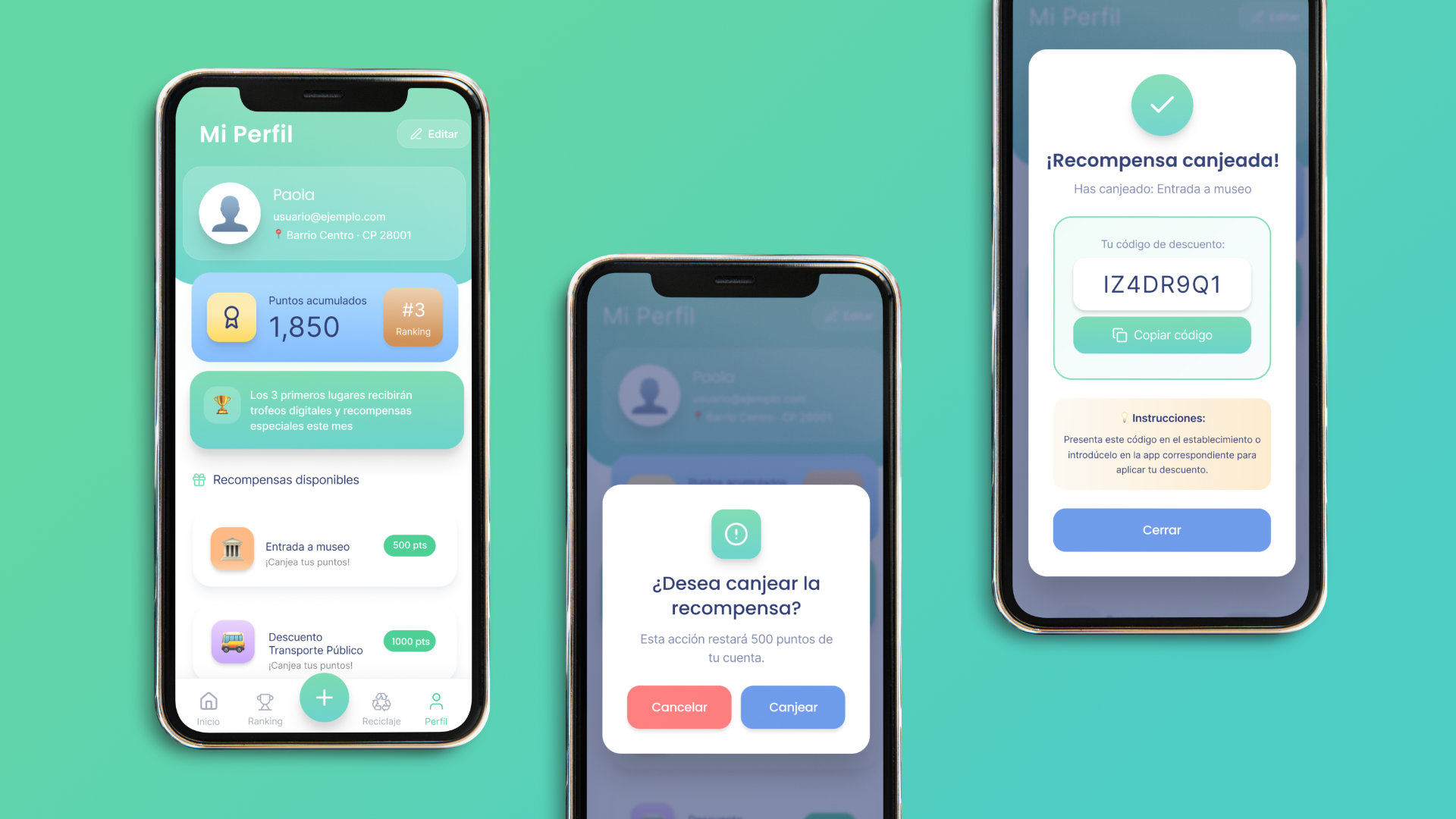
Colaborapp — profile banner
04 — Design
High Fidelity UI

Design System

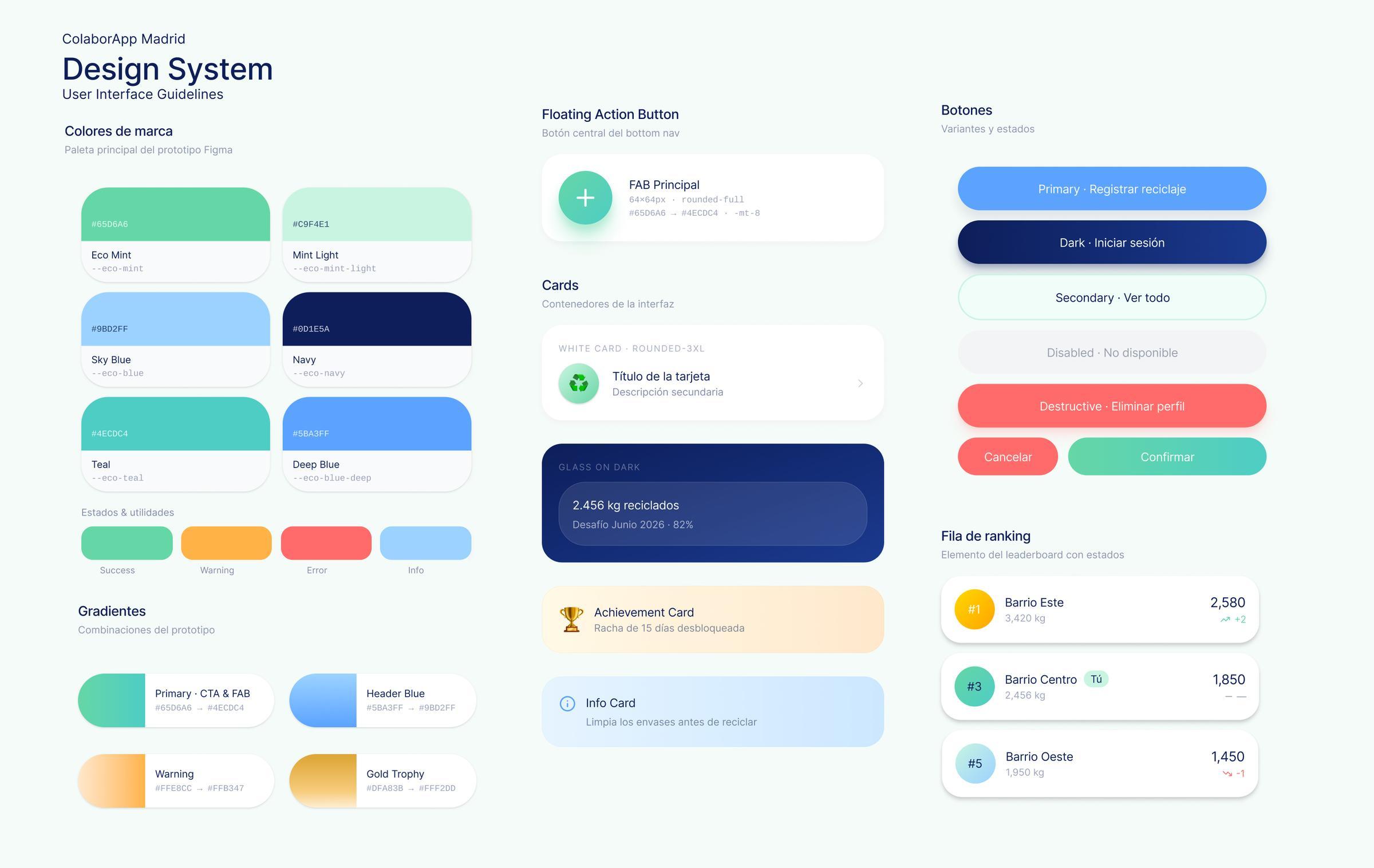
The visual system pairs a nature-forward green palette with rounded, friendly components that lower cognitive friction. Built component-first in Figma with an 8pt grid and a 4-token colour system. Translated behavioral recycling insights into an explicit, modular UI component library — built atomic-first so that layout components, status rewards, and navigation markers retain structural integrity across any screen density.

Typeface

Poppins & Inter

Poppins for headings and display; Inter for body and UI — pairing geometric warmth with maximum legibility

Grid

8pt / 16px gutters

Consistent rhythm across all 24 screens

Icons

Filled, 24px

High legibility for outdoor, glance-level use cases

Motion

Spring micro-animations

Point tallies with celebration moments reinforce positive behaviour

Colaborapp — Design system component library
05 — Outcomes

Measured results

Validated through two rounds of moderated usability testing with Madrid residents aged 22–55.

82% Task completion rate across core flows — target was 75%
4.6/5 Average satisfaction score across 12 prototype test sessions
3 min Onboarding time — down from 7 min in the first prototype
+40% Stated recycling intent after a single prototype session
"I never thought about which barrio recycled more than mine — now I actually want to win."
Usability test participant, Malasaña

Gamification only works when the loop is tight

Early prototypes had too much friction between action and reward. Compressing the feedback loop — points visible within 2 seconds of scanning — was the single biggest driver of engagement.

Education must be embedded, not gated

Positioning the learning module as optional bonus content (not a mandatory onboarding step) increased completion rates by 60% in round 2 testing.

District identity is a powerful motivator

Users referred to their barrio by name unprompted during sessions — leaning into this identity through trophy visuals and district colours was a late but high-impact design decision.